Before acting on a reply
Check the Contact Channel Before Acting on a Singing Meetup Booking Request
A message about a singing meetup may include an address, a contact name, or instructions to confirm a booking. Before acting, establish where the message came from and whether it concerns your actual inquiry. This is a source-checking exercise, not a way to certify a business or guarantee a transaction. An unresolved question should remain unresolved until you can check it.
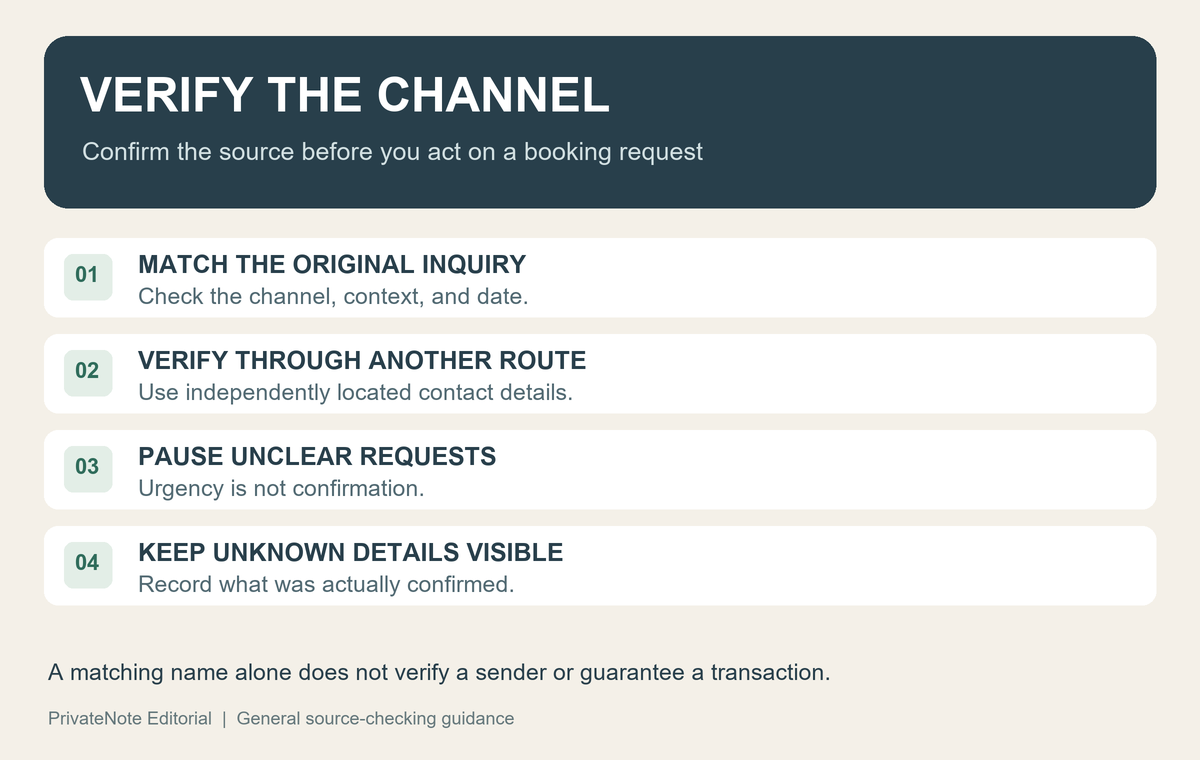
Keep the original inquiry in view
Note which channel you used, what you asked, and when. When a reply arrives somewhere else, do not assume it belongs to the same conversation because it mentions a familiar venue name. Compare the context with your original request.
Avoid forwarding a screenshot as proof without checking its source. A screenshot can preserve wording, but it does not independently establish who sent it or whether the instructions remain current. Keep the relevant original conversation available instead of relying only on a cropped image.
Confirm through a route found independently
If a message is unexpected or an instruction seems different, contact the business through a route you have independently located and have reason to trust. Do not use only the new link or number supplied in the message you are trying to verify.
The US Federal Trade Commission gives this general advice for uncertain messages requesting money or personal information: check with the claimed sender using independently obtained contact details, and resist pressure to act immediately. Its consumer guidance on recognizing scams is a useful reference. This does not establish whether any particular venue or message is legitimate.
Ask about a change without assuming wrongdoing
A new contact person or a changed instruction is a reason to clarify, not automatic proof of misconduct. Ask the established contact whether the new person or channel is authorized to handle your inquiry. Describe the change accurately without copying unnecessary private details.
You can ask: “I received different instructions through another channel. Can you confirm whether those instructions apply to the inquiry I sent on [date]?” Wait for a clear answer rather than interpreting a vague acknowledgment as confirmation.
Slow down an unclear request
Do not let an urgent tone replace verification. If someone asks you to commit or send information before you understand the request, pause and clarify what action is being requested and by whom. You do not need to turn an uncertain situation into a decision while still trying to identify the sender.
Avoid supplying passwords, login codes, or unrelated documents to demonstrate that you are the person making the inquiry. Clarify which inquiry the instruction belongs to before treating it as part of the plan. A date, reference, and written answer help separate current instructions from an older conversation.
Record what was confirmed, not what you hope is true
Keep a short note with the original contact route, the question you asked, the answer's date, and any condition still open. Separate a confirmed contact from an unverified account that merely uses a similar name.
If another person in the group will handle the booking, share the verified context and the remaining questions. Do not announce that everything is safe simply because one detail matched. Avoid posting private correspondence, account details, or personal contact information on a public planning page.
Use a brief check before proceeding
- Does the reply match an inquiry the group actually made?
- Was any changed instruction checked through an independent route?
- Is it clear who is authorized to answer?
- Are unanswered conditions still visible?
- Has urgency been kept separate from verification?
Written by the operator of PrivateNote, a Korean-language information resource. The linked material may require Korean reading ability. This is general source-checking guidance, not a venue review or verification of a particular sender.